VoiceFlow
Retell call exporter with local Whisper transcription
- Timeline
- Apr 2026
- Role
- Solo open-source tool
- Status
- Open source
- Primary stack
- FastAPI · Whisper · Next.js · Docker
Headline metrics
- What it tackles
- Getting Retell call recordings out for QA means hand-scripting the API every time, and the obvious transcription route ships customer audio to a third-party cloud service.
- What it delivers
- An open-source export pipeline with filters and column selection, transcribed by Whisper large-v3 running locally, so the audio never leaves the machine.
The problem in full
Teams running Retell voice agents accumulate thousands of call recordings, and getting them out for QA or analysis means hand-scripting against the API every time. Worse, the obvious transcription route - a cloud speech-to-text service - means shipping customer call audio to yet another third party.
VoiceFlow is the tool I wanted while working with the Retell stack: point it at an API key, pick the columns and date range, and get transcribed, structured exports - without any audio leaving the machine.
System design
A FastAPI backend drives the pipeline: a column-discovery endpoint reads the first call's metadata so the UI adapts to whatever fields the account actually has, then an export job fetches calls with date-range filtering, downloads the audio, and runs Whisper transcription locally - large-v3 by default, GPU-accelerated when one is available.
Exports run as async jobs. Kicking one off returns a job ID immediately; progress, per-call summaries, and live logs stream to the Next.js UI over server-sent events, so a multi-hour export is watchable rather than a black box.
Everything lands in a structured JSON export with exactly the columns selected. The whole stack ships as a docker-compose file: one command, two services, running.
Key technical decisions
Local Whisper over cloud STT
Call audio is the most sensitive artifact a voice agent produces. Running Whisper locally means it never crosses another trust boundary. The price is speed - roughly 5-10 minutes per hour of audio on CPU - which GPU acceleration cuts substantially.
Async jobs, not request-response
An export can take minutes to hours depending on call volume and hardware. POST /api/run returns a job ID instantly and the job manager owns the lifecycle, so the UI never sits on a hanging request.
SSE for progress, not polling
Server-sent events push logs and progress the moment they happen - the same streaming pattern as Jobzyl's live search. For one-directional progress updates, SSE beats websockets on simplicity and beats polling on latency.
Column discovery from live metadata
Retell accounts differ in what call metadata they carry. Reading the schema from a real call instead of hardcoding fields means the export UI is always accurate for the account in front of it.
The results in full
A working open-source export pipeline: select columns, filter by date, and receive a structured JSON export with local transcripts attached. The ~3GB Whisper model downloads once and is cached; transcription uses the GPU when present.
Deployment is a single docker-compose up - FastAPI backend on one port, Next.js frontend on another, no external services required beyond the Retell API itself.
What I'd do next
The honest cost is the CPU path: 5-10 minutes per audio-hour means the privacy promise is only comfortable with a GPU. If local-first is the point, the next version should chunk audio and fan transcription across workers so the no-cloud constraint stops taxing throughput.
Beyond that, the natural next steps are a persistent job store so exports survive a restart, and speaker diarization so transcripts separate agent from caller - the two things I'd want before pointing it at a production-scale call archive.
Continue reading
Autonomous Voice Agent
Cutting voice-agent latency 54%, from 2.4s to 1.1s
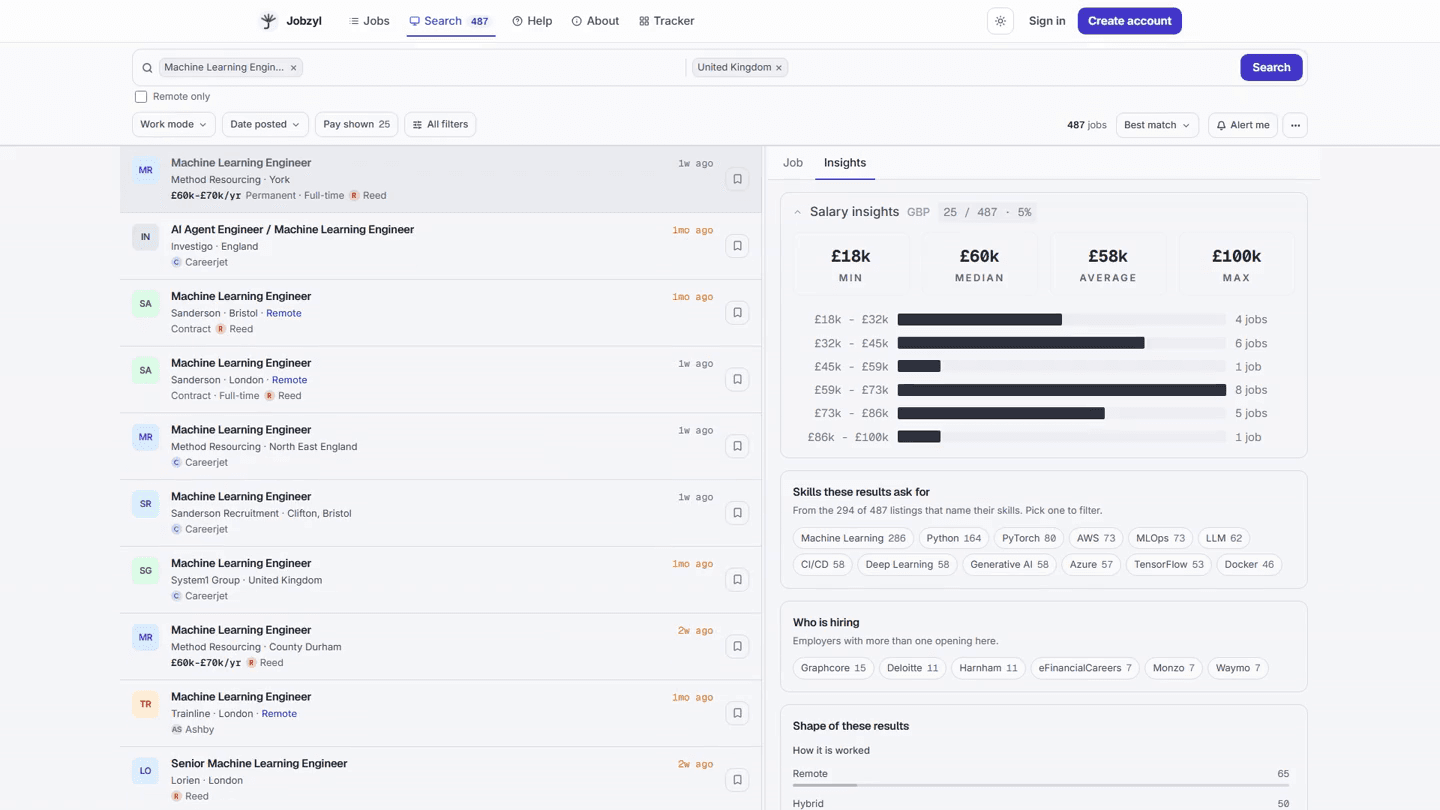
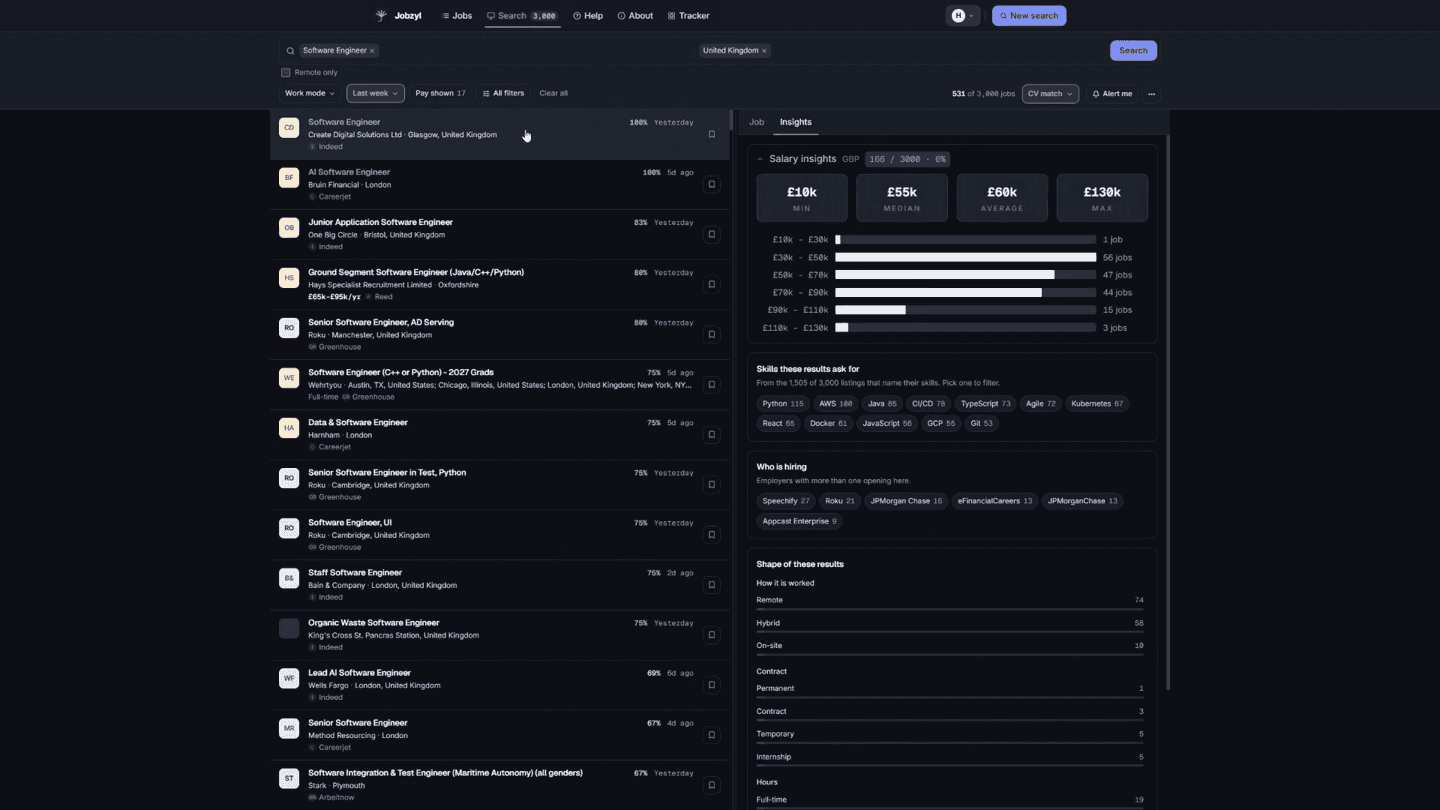
Jobzyl
One search across 29 job sources, with semantic CV matching